
The useful Credit Karma write-ups online do not pretend it is “free FICO from all three bureaus.” They frame it as what it is: a free Equifax + TransUnion habit app funded by product recommendations. That is the angle this review uses.
Intuit Credit Karma shows VantageScore® 3.0 scores and reports from Equifax and TransUnion, alerts you when those files change, and layers on free breach/email-style identity monitoring. It does not monitor Experian, does not show the FICO many lenders use, and is not paid three-bureau identity insurance. Pair it with AnnualCreditReport.com and free credit freezes.
Related: best credit monitoring services, CreditWise, SoFi Coach, TransUnion Premium, credit utilization.
Education about a free consumer platform—not a promise that monitoring stops identity theft, and not credit-repair advice.
Why Credit Karma keeps winning “best free” lists
Investopedia and similar roundups often crown Credit Karma as the best free credit monitoring starting point for one reason: among free tools, it is uncommon to get two bureaus’ scores + reports + change alerts with daily-style refreshes and strong mobile apps—without a subscription.
What those same reviews also stress:
- The product is free because marketplace offers (cards, loans, other Intuit funnels) pay the bills.
- Experian is missing from the score/monitoring pair.
- The number you see is VantageScore 3.0, which can sit 20–50+ points away from a lender’s FICO without either file being “wrong.”
- There is no identity-theft insurance on the free tier.
If you keep those four truths in mind, Credit Karma is excellent. If you treat it as three-bureau FICO truth + full ID protection, you will over-trust it.
Get your free Credit Karma scores →
What Credit Karma actually is
Credit Karma is not a credit bureau. It is a personal-finance platform owned by Intuit that partners with Equifax and TransUnion to display scores and reports, then earns when you engage loan and card offers matched to your profile.
| Item | Typical Credit Karma experience |
|---|---|
| Cost | Free for scores, reports, monitoring, basic ID alerts |
| Score model | VantageScore 3.0 (Equifax and/or TransUnion) |
| Bureaus in app | Equifax + TransUnion (not Experian for scores/reports) |
| Refresh cadence | Frequently described as daily score/report updates by reviewers; confirm in-app |
| Monitoring | Alerts on key TU + EQ changes (new inquiries, new accounts, etc.) |
| Identity extras | Breach/dark-web scan tied to account email; lock status for TU/EQ |
| Hard pull to view? | Viewing is designed as a soft look; applying for a recommended product can hard-pull |
Credit Karma’s own free-score page is clear: it is not a bureau, creditors do not report to Credit Karma, and a score elsewhere may use a different model or report.
What you get for free (in detail)
Dual-bureau scores and reports
On its free credit score page, Credit Karma states that VantageScore 3.0 scores come directly from Equifax or TransUnion, that you can check TU and EQ scores and factors anytime, and that it will notify you when they change.
Major VantageScore 3.0 factor themes it surfaces include payment history, age/depth of credit, total balances/utilization, recent credit behavior, and available credit—useful for habit tracking, not for predicting one lender’s underwriting model.
Because lenders choose which bureau and which score, your Karma number can differ from a mortgage, auto, or card decision score. That gap is normal—not proof the app is broken.
Credit monitoring alerts
On credit monitoring, Credit Karma says it watches Equifax and TransUnion and alerts on key changes—for example a new hard inquiry or a new credit card on those reports. Push notifications on the mobile app are the habit layer most people actually use.
That is the feature independent reviews call the most genuinely useful part of the product: reactive fraud spotting on two of three files.
Identity monitoring (free tier)
Credit Karma’s identity monitoring searches breach databases and dark-web-style sources for the email tied to your account, flags exposure, and can surface compromised-password signals. It also shows credit lock status for TransUnion and Equifax and points you toward bureau lock tools.
Important limits Credit Karma’s own education echoes:
- Monitoring is reactive, not a freeze.
- Credit alerts do not catch every form of fraud (bank takeover, SSN misuse outside credit files, etc.).
- A lock status view is not the same as a federal security freeze you place at each bureau.
Disputes and errors
Credit Karma can help you start dispute flows for errors on Equifax and TransUnion. Experian errors need a separate path (Experian directly, AnnualCreditReport.com, or another tool).
Marketplace and money extras (optional)
Beyond credit, Credit Karma surfaces tax-adjacent Intuit funnels, spending/cash-flow views, and personalized product offers. Treat approval-odds tiles as ads with math, not as the only card or loan you could qualify for elsewhere.
Enable Credit Karma monitoring →
The Experian gap (why “two bureaus” still leaves a hole)
Credit Karma partners with two of three nationwide bureaus. Experian is the missing file for scores and monitoring inside the app.

Why it matters in practice:
- Some lenders pull Experian only.
- A fraudulent account or inquiry that hits Experian first may not trigger Karma’s bureau alerts.
- Paying for nothing else while assuming “Karma watches everything” is the most common free-tool mistake.
Free stack that closes more ground:
- Credit Karma — Equifax + TransUnion VantageScores and alerts
- CreditWise or Experian free — FICO / Experian-leaning view
- AnnualCreditReport.com — all three reports on a schedule
- Free freezes at Equifax, Experian, TransUnion — guide
Soft look vs offer pressure
Viewing scores through Credit Karma is designed as a soft inquiry path that should not lower your score. Clicking into a recommended card or loan and finishing an application can trigger a hard inquiry.
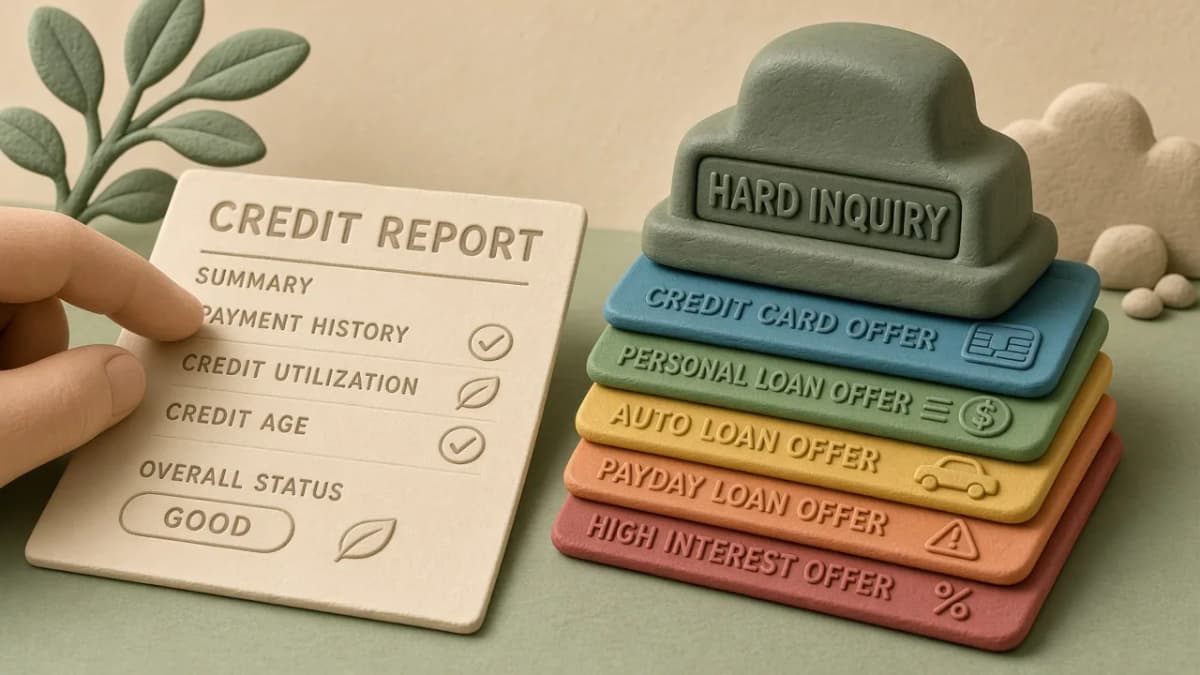
Rule: Use Karma to watch and dispute. Pause before partner applications unless you already planned that product for that week.
Who Credit Karma is for
Strong fit
- You want free dual-bureau VantageScores in one app
- You will open alerts and investigate inquiry or new-account spikes
- You may dispute TU/EQ errors without a bureau subscription
- You understand offer tiles are marketing, not fiduciary advice
Poor fit
- You need FICO Score 8 for mortgage shopping → add CreditWise or Experian
- You want paid dark-web + insurance + three-bureau alerts in one bill → TransUnion Premium or Aura-style suites
- You cannot resist applying for every pre-qualified card → the app will feed that habit
- You expected Credit Karma to freeze credit by itself — you still contact bureaus
Credit Karma vs SoFi vs CreditWise vs TransUnion
| Credit Karma | SoFi Coach | CreditWise | TransUnion Premium | |
|---|---|---|---|---|
| Cost | Free | Free | Free | ~$29.95/mo |
| Scores | EQ + TU VantageScore 3.0 | TU VantageScore | TU FICO 8 | TU VantageScore (+ 3-bureau paid) |
| Alert bureaus | EQ + TU | TU-focused | TU + Experian | 3 on paid tier |
| Money / offers | Heavy marketplace | Strong Coach money tiles | Credit-focused | Credit/ID suite |
| Main tradeoff | No Experian; offer noise | One bureau score | No Equifax | Costs money |
SoFi’s own Credit Karma comparison page mirrors this: Karma is broader on bureaus for VantageScore; SoFi is broader on integrated money management. Many people run Karma + CreditWise for free coverage of different score models and bureau mixes.
How to set up Credit Karma well
Sign up with an email you monitor
Identity monitoring is tied to your account email for breach alerts.
Turn on push notifications
Alerts only help if you read them within days, not months.
Review both Equifax and TransUnion reports
Compare side-by-side; mismatches between bureaus are common.
Freeze all three bureaus the same afternoon
Use Karma for watching; use freezes for blocking new credit pulls.
Add CreditWise or Experian free for Experian/FICO visibility
Close the third-bureau blind spot without paying yet.
Ignore offer tiles until you have a written plan
New inquiries and new cards change the file you just cleaned up.
Pros and cons
Pros
- Free Equifax and TransUnion VantageScores
- Useful change alerts on two bureaus
- Free identity/breach monitoring layer
- Dispute pathways on TU/EQ
- No Capital One or SoFi account required
- Often cited as the strongest free starting monitor for dual-bureau coverage
Cons
- Experian not monitored in-app
- VantageScore ≠ many lenders’ FICO
- Ad/marketplace pressure toward new credit products
- Not a substitute for freezes or paid ID restoration
- Does not fix accurate negative history (nor should it promise to)
Common mistakes
- Assuming “free monitoring” means Experian is covered
- Applying for five Karma-recommended cards in one weekend
- Treating VantageScore as your mortgage score
- Skipping official reports at AnnualCreditReport.com
- Paying for Premium monitoring while never opening Karma alerts
Bottom line
Credit Karma is the default free dual-bureau habit app for millions of Americans—and a frequent “best free monitor” pick—because Equifax + TransUnion scores, reports, and alerts in one place are hard to beat at $0. Use it for VantageScores, TU/EQ alerts, and dispute starting points—not as your only fraud defense or FICO truth source.
Add CreditWise for FICO 8 + Experian alerts, pull all three reports on schedule, and freeze by default. If you need paid three-bureau + identity insurance, compare TransUnion Credit Premium.
Is Credit Karma really free?
Yes. Credit Karma does not charge for scores, reports, monitoring, or its basic identity monitoring tier. It earns money when users engage with recommended financial products.
Which credit bureaus does Credit Karma use?
Equifax and TransUnion for scores and reports. Experian is not included in Credit Karma’s free score/monitoring pair.
Does Credit Karma use FICO or VantageScore?
VantageScore 3.0. Many lenders use FICO versions, so numbers can differ from a loan decision score—sometimes by tens of points.
Does Credit Karma hurt my credit score?
Viewing scores through Credit Karma is typically a soft inquiry and should not lower your score. Applying for a product Credit Karma links you to can result in a hard inquiry.
Can Credit Karma monitor Experian?
Not for the free dual-bureau score and alert product described on its site. Use AnnualCreditReport.com, Experian’s tools, CreditWise, or a paid three-bureau monitor for Experian coverage.
Is Credit Karma good for identity theft protection?
It offers free helpful alerts (breaches, report changes) but not the full insurance/restoration stack of paid identity suites. Freezes and fraud alerts remain essential.
Credit Karma vs CreditWise—which is better?
Credit Karma covers two bureaus with VantageScore. CreditWise shows TransUnion FICO 8 and alerts on TransUnion and Experian. Many people use both.
Credit Karma vs SoFi Coach?
Karma wins on dual-bureau VantageScore coverage. SoFi wins if you want credit inside a fuller spending/debt/net-worth dashboard. Different jobs.
Sources and notes
- Intuit Credit Karma, Free credit score, Credit monitoring, Identity monitoring, Identity theft protection education.
- Credit Karma Support, Credit lock status.
- Investopedia, Best credit monitoring services — Credit Karma as a common free dual-bureau pick.
- SoFi, Credit Karma vs SoFi Coach — feature comparison cited in this article.
- CFPB / FTC resources on freezes, fraud alerts, and credit reports.
- AnnualCreditReport.com.
- Product features and Intuit integrations change—confirm on Credit Karma’s live site.
- This article does not guarantee score accuracy, approvals, or fraud prevention.