
The Equifax reviews that help shoppers do not sell the logo. They sell the product ladder—and the two details Equifax itself puts in fine print: scores are VantageScore® 3.0, and Complete Premier’s three-bureau reports/scores are typically annual, while daily deep access stays Equifax-first. That is the angle this guide uses.
Equifax is one of the three nationwide U.S. credit bureaus. Its consumer lineup commonly includes Credit Monitor (Equifax lock + alerts), Equifax Complete™ (Equifax monitoring + lighter ID stack), and Equifax Complete™ Premier (three-bureau monitoring + annual three-bureau report/score pull + heavier ID features). Prices and insurance caps move by funnel—confirm live before you pay. None of these replace free security freezes at Equifax, Experian, and TransUnion.
Related: TransUnion Premium, Experian memberships, Credit Karma, credit freeze, best credit monitoring.
Education only—not a quote, loan advice, or fraud-prevention guarantee.
Why Equifax shows up on comparison lists
Shoppers comparing bureau plans usually want one of three jobs:
- Watch the Equifax file (lock + alerts) without buying a full identity suite.
- Three-bureau monitoring sold by Equifax instead of TransUnion or Experian.
- Identity restoration + insurance marketing bundled with credit alerts.
Equifax can do all three—but the free alternatives are strong:
- Free Equifax VantageScore habit via Credit Karma (Equifax + TransUnion).
- Free FICO habits via CreditWise / Experian Free.
- Free blocking via credit freezes.
Pay Equifax when you want bureau-native alerts/restoration in Equifax’s shell—not because monitoring raises scores.
Browse Equifax personal products →
The Equifax product ladder (confirm live prices)
Equifax’s consumer naming shifts by page and promo. Treat this as the job map, then verify the checkout cart.
| Product (typical) | Published price range* | Core job |
|---|---|---|
| Equifax Credit Monitor™ | Often ~$4.95/mo | Daily Equifax VantageScore + Equifax report access, alerts, Equifax lock |
| Equifax Complete™ | Often ~$9.95/mo | Equifax monitoring + ID restoration help + insurance marketing (often up to $500K on Complete pages) |
| Equifax Complete™ Premier | Often ~$19.95–$29.95/mo after trial/promo | 3-bureau monitoring/alerts + annual 3-bureau VantageScores/report + daily Equifax access + heavier ID stack |
*Promo funnels disagree (trial language at ~$19.95, some ads at ~$4.95 first month then ~$29.95). Never trust a review price alone.
Family plans (another adult + child locks) appear in Equifax’s product-finder materials—confirm coverage and caps live if you need household protection.
The two catches that define Equifax
1. Score model: VantageScore 3.0, not FICO
Equifax’s monitoring pages are blunt: the score provided is a VantageScore 3.0 based on Equifax data (and, for annual three-bureau score views, VantageScores built from each bureau’s data). Third parties—including many lenders—are likely to use a different score.
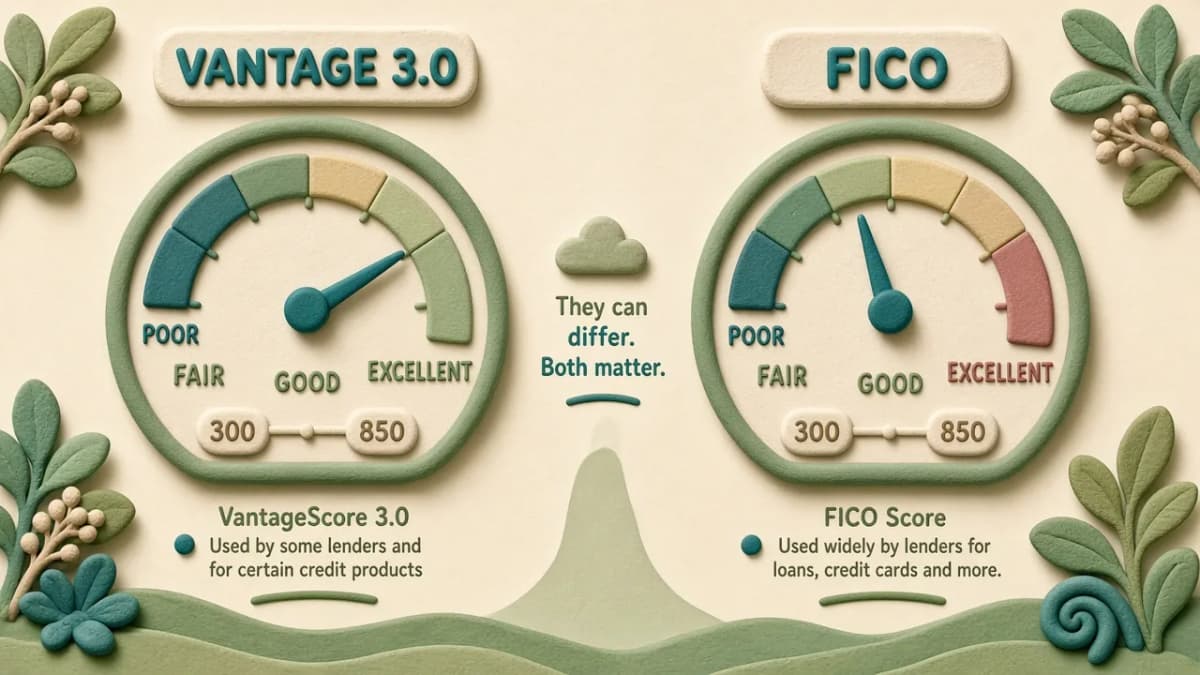
Practical stack: Use Equifax products for alerts and Equifax-file habits. For a free FICO habit, keep CreditWise or Experian Free. For Equifax + TransUnion VantageScores at $0, keep Credit Karma.
2. Three-bureau reports: often annual, not daily
Premier marketing highlights annual access to three-bureau VantageScores and a three-bureau report, while daily deep access is typically your Equifax score/report. Three-bureau monitoring/alerts can still run more continuously (Equifax notes Experian/TransUnion monitoring can take several days to start).
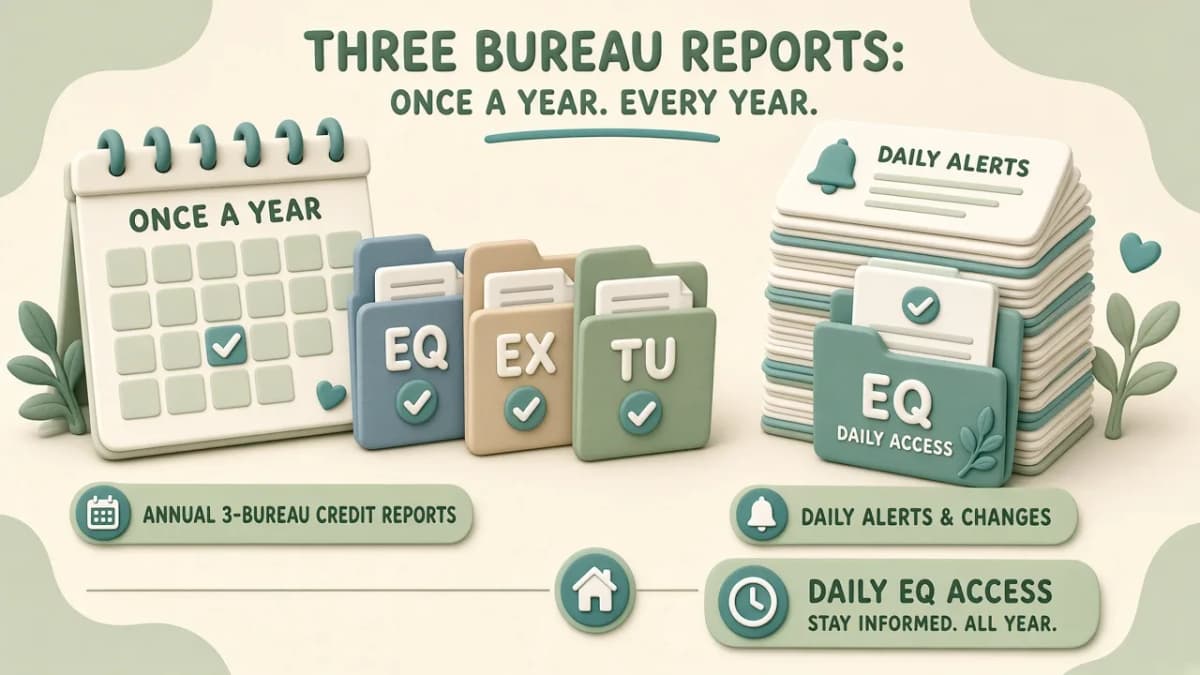
Compare that to TransUnion Credit Premium, which markets quarterly three-bureau reports/scores on its Premium tier. If “how often I can pull all three reports inside the paid app” is your buying criterion, put both matrices side by side the week you enroll.
What each rung actually includes
Equifax Credit Monitor (~$4.95/mo)
From Equifax’s lock-and-monitor materials:
- Daily access to an Equifax VantageScore 3.0
- Equifax credit report access (with limited exceptions)
- Alerts on key Equifax score/report changes
- Ability to lock/unlock the Equifax credit report (with documented exceptions)
Buy Credit Monitor only if you want an Equifax-native lock toggle and will open alerts—after you already placed free freezes (or instead of relying on lock alone).
Equifax Complete (~$9.95/mo)
Complete pages emphasize Equifax-file monitoring plus identity extras:
- Daily Equifax VantageScore + Equifax report monitoring/alerts
- Equifax credit report lock
- Automatic fraud alerts (annual renew language on Equifax pages)
- ID restoration specialists
- Identity theft insurance marketed up to $500,000 on Complete product pages (policy terms apply)
This is not the three-bureau Premier rung. Do not buy Complete thinking you unlocked Experian/TransUnion monitoring.
Equifax Complete Premier (three-bureau marketing tier)
From Equifax’s three-bureau monitoring pages and Premier spec materials, Premier typically layers:
- 24/7-style monitoring of Equifax, Experian, and TransUnion files (with startup lag notes for the other bureaus)
- Daily Equifax VantageScore + Equifax report access
- Annual three-bureau VantageScores and three-bureau report
- Dark WebScan / Web Detect-style scanning for SSN and other sensitive identifiers
- Equifax report lock + automatic fraud alerts
- Lost wallet assistance, personal data removal / people-search scrubbing (where offered)
- SSN monitoring for high-risk uses (network coverage not universal)
- ID restoration specialists
- Identity theft insurance marketing that can list up to $1M–$2M depending on the live page, plus stolen-funds replacement language on some Premier funnels (always read the Assurant/American Bankers policy summary)
See Equifax three-bureau monitoring →
Lock vs freeze (same rule as Experian/TransUnion)
Equifax’s lock footnotes match the CFPB’s freeze logic:
- Locking Equifax does not lock Experian or TransUnion.
- Certain parties can still access a locked Equifax file (existing creditors, insurers, employers/tenant screeners in some cases, government, fraud/authentication uses, and—unless you opt out—prescreen offers).
- A free security freeze at all three bureaus remains the default blocking tool.
If you cancel a paid product that includes lock, confirm whether the file stays locked or reverts—do not assume subscription features outlive the bill. Prefer freezes for permanence.
Who Equifax products are for
Strong fit
- You want bureau-direct Equifax lock + alerts in Equifax’s app
- You are comparing Premier against TransUnion/Experian paid suites and prefer Equifax’s insurance/restoration marketing
- You already freeze all three files and want three-bureau alerts with annual tri-bureau report access
Poor fit
- You mainly need a free Equifax VantageScore habit → Credit Karma
- You need FICO Score 8 → CreditWise or Experian Free
- You want quarterly three-bureau report pulls inside the paid app → price TransUnion Premium side by side
- You refuse freezes and think insurance marketing replaces prevention
- You still distrust Equifax after past breach history and will not open the app—paying for unread alerts helps nobody. Judge the live plan table and your alert habit, not the logo alone.
Equifax vs TransUnion vs Experian vs free apps
| Equifax Complete Premier | TransUnion Premium | Experian Premium | Credit Karma (free) | |
|---|---|---|---|---|
| Cost | Often ~$20–$30/mo (confirm) | ~$29.95/mo | ~$29.99/mo | $0 |
| Score brand | VantageScore 3.0 | VantageScore (TU + paid) | FICO views | EQ + TU VantageScore 3.0 |
| 3-bureau reports in-app | Often annual | Often quarterly | Paid tier matrix | No (2 bureaus free) |
| 3-bureau alerts | Premier yes | Premium yes | Premium yes | EQ + TU only |
| Best for | Equifax-native suite shoppers | This site’s affiliate focus | FICO + Boost ladder | Free dual-bureau habit |
Vs TransUnion Premium: Same job family. Compare report cadence, insurance terms, and which app you will open.
Vs Experian: Experian Free gives FICO + Boost at $0; Equifax’s free score habit usually comes from third-party apps like Credit Karma, not an Experian-style free membership twin.
How to buy Equifax without wasting money
Freeze all three bureaus first
Equifax lock is optional convenience. Freezes are the baseline. See credit freeze guide.
Name the job
Equifax-only lock/alerts → Credit Monitor. Equifax + light ID → Complete. Three-bureau alerts + annual reports → Premier.
Read the score line
Confirm VantageScore 3.0. Add a free FICO tool if lender decisions matter this quarter.
Read the report cadence line
If Premier only offers annual three-bureau reports, decide whether that is enough versus TransUnion’s quarterly cadence.
Screenshot the checkout price
Trial, first-month, and standard monthly rates differ by URL. Save the order confirmation.
Calendar a 60-day cancel check
If you are not opening alerts, cancel. Equifax states no partial-month refunds on many pages.
Pros and cons
Pros
- Bureau-direct Equifax lock, alerts, and report access
- Clear ladder from cheap Equifax-only monitor to Premier three-bureau
- Three-bureau monitoring on Premier with dark-web / SSN-style extras
- ID restoration specialists + insurance marketing (caps vary by plan page)
- Useful comparison option against TransUnion/Experian paid suites
Cons
- VantageScore, not FICO—lenders may differ
- Premier’s full three-bureau reports often annual, not daily
- Other-bureau monitoring can take days to activate
- Lock ≠ freeze; Equifax lock does not cover Experian/TransUnion
- Prices and insurance caps vary wildly by funnel
- Past breach history makes some readers prefer another brand—habit beats logo
Common mistakes
- Buying Complete thinking it includes Experian/TransUnion monitoring
- Assuming Premier means daily three-bureau full reports
- Treating Equifax VantageScore as a mortgage underwriting score
- Paying for lock instead of placing free freezes
- Skipping Credit Karma’s free Equifax score view when that was the only need
- Leaving Premier on autopay after you stop reading alerts
Bottom line
Equifax is the bureau-direct alternative when you want Equifax-native monitoring—or a Premier three-bureau suite—to compare against TransUnion and Experian. Default stack for most people: freezes everywhere + free score apps (Credit Karma for Equifax Vantage, CreditWise for FICO). Step to Credit Monitor / Complete / Premier only for a named job, after you confirm VantageScore, report cadence, and the exact monthly price on checkout.
If paid three-bureau + identity is the job, price Premier next to TransUnion Credit Premium and Experian Premium the same week—and keep only the suite you will actually open.
Visit Equifax personal products →
Does Equifax monitoring show a FICO Score?
Equifax’s Complete/Credit Monitor materials state the score is VantageScore 3.0. Lenders may use FICO or another model.
How often can I see three-bureau reports on Premier?
Many Equifax Premier pages describe annual three-bureau scores/reports, with daily access focused on the Equifax file. Confirm the live product page.
Is Equifax Complete the same as Complete Premier?
No. Complete is typically Equifax-focused monitoring plus ID extras. Premier is the three-bureau marketing tier.
Does an Equifax lock replace a freeze?
No. Locks are convenience features with exceptions, and they do not lock Experian or TransUnion. Freezes are free and remain the baseline.
Can I get an Equifax score for free?
Yes via tools like Credit Karma (Equifax + TransUnion VantageScores) and scheduled pulls at AnnualCreditReport.com—not the same as paid Complete alerts.
Equifax Premier vs TransUnion Premium?
Same job family. Compare monthly price, insurance terms, report cadence (annual vs quarterly language), and which dashboard you will open.
Sources and notes
- Equifax, Complete / monitor credit & identity, 3-bureau monitoring and reports, Credit Monitor, product finder.
- Equifax Complete Premier product specification PDF (legacy storefront feature list).
- Equifax free-trial / promo pages for Complete Premier pricing footnotes (prices vary by funnel).
- CFPB freeze guidance; AnnualCreditReport.com.
- Features, prices, and insurance limits change—confirm on Equifax’s live site.
- This article does not guarantee score accuracy, approvals, or fraud prevention.